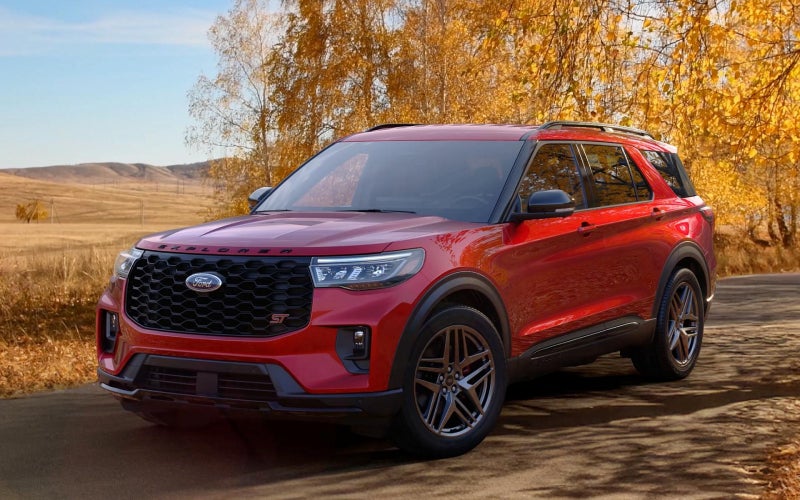

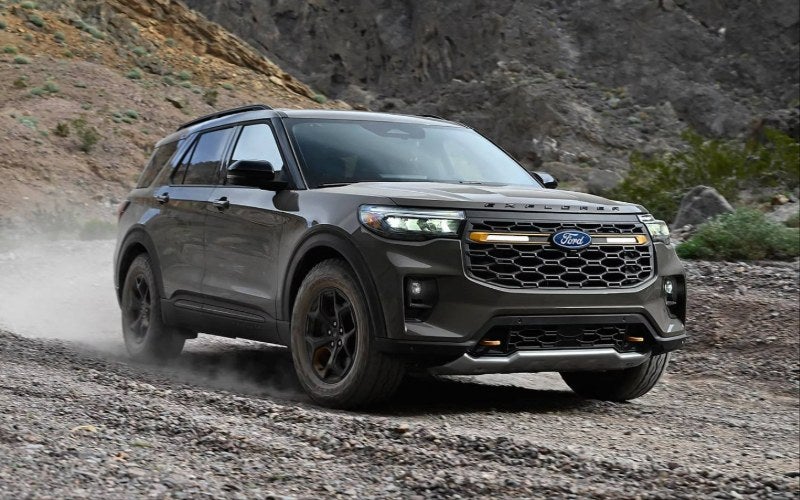
Ford of Oakland - Why the 2027 Ford Explorer ST-Line Makes Sense for Berkeley, CA Drivers The 2027 Ford Explorer® ST-Line is a smart choice for Berkeley, CA drivers who want a three-row SUV that feels modern, useful, and stylish without moving into a full performance trim. Berkeley driving can mean a little bit of everything in one week: tight neighborhood streets near the hills, family trips across the Bay, grocery runs, campus-area traffic, and longer highway routes toward Marin, the Peninsula, or the Tri-Valley. In that mix, the ST-Line hits a practical sweet spot. It keeps the responsive 2.3L EcoBoost® I-4 engine, offers the spacious Explorer cabin, and adds technology and design upgrades that are easy to appreciate every day. What makes the ST-Line especially compelling is how naturally its features support real ownership. This is not a trim that only looks good on paper. The 360-degree camera can make a real difference when parking in compact garages or maneuvering along crowded commercial streets. The B&O® Sound System by Bang & Olufsen® with 10 speakers, including a subwoofer, turns routine drives into a better listening experience. The unique cloth-trimmed front- and second-row seats with red stitching add visual character without making the cabin feel too delicate for family use. For Berkeley shoppers who want capability, comfort, and a little personality, the ST-Line brings the right mix. A Three-Row SUV That Still Fits Daily Bay Area Life The Explorer® ST-Line gives you the flexible seating and cargo capacity expected from a midsize three-row SUV. Like the Active model, it offers up to 85.8 cu ft of maximum cargo volume, which is valuable for shoppers who want room for sports gear, luggage, home projects, musical equipment, school items, or weekend supplies. Standard second-row captain’s chairs make it easier for passengers to access the third row, and available seven-passenger seating gives shoppers another option if an extra seat matters more than the center aisle. That flexibility matters in Berkeley because a vehicle often has to serve more than one purpose. A weekday commute might be followed by a hardware store stop, a ride-share pickup for family, or a drive to a trailhead in the East Bay hills. The ST-Line handles those shifts with a cabin that is roomy but not excessive, refined but not overly complicated, and practical enough for families who need an SUV to work hard during normal routines. Why ST-Line Is More Than an Appearance Package Many shoppers first notice the ST-Line because of its sport-inspired look, but the trim’s appeal goes deeper than design. The 360-degree camera is one of the most useful upgrades in the lineup because it gives a clearer view around the SUV when space is limited. That can help in parking lots, near curbs, and around low obstacles that are easy to miss from the driver’s seat. For Berkeley drivers, where parking precision is often part of daily life, that single feature can become a favorite very quickly. The audio upgrade is another meaningful difference. The B&O® Sound System by Bang & Olufsen® includes 10 speakers and a subwoofer, giving podcasts, navigation prompts, playlists, and calls a richer, more polished sound. It is a comfort feature, but it also changes how the SUV feels during everyday use. A vehicle that sounds better, parks more confidently, and looks more distinctive is easier to enjoy over the long term. Parking confidence: The 360-degree camera helps with tight spaces and curbside maneuvering. Cabin personality: Red stitching gives the first and second rows a sport-inspired look. Better audio: The B&O® Sound System adds depth for music, calls, and podcasts. Explorer utility: Three-row seating and generous cargo capacity remain core strengths. Power and Confidence Without Overcomplication The ST-Line uses the 2.3L EcoBoost® I-4 engine, which is standard on all Explorer trims except ST. With 300 hp, this engine gives the SUV strong everyday response for merging, climbing grades, and moving confidently with passengers on board. It is a good match for Berkeley drivers because it provides the power needed for freeway transitions and hillier streets without requiring the higher-output personality of the ST. Rear-wheel drive is standard, and available Intelligent 4WD gives shoppers another layer of confidence. For drivers who often head beyond Berkeley toward regional parks, coastal routes, or mountain roads, Intelligent 4WD can be an appealing option. The ST-Line does not try to be the off-road-focused Tremor® or the performance-centered ST, and that is part of its strength. It stays focused on the kind of driving most SUV owners do every week: commuting, errands, family trips, and occasional longer travel. Technology That Supports the Driver The 2027 Explorer® lineup features the Ford Digital Experience, which brings familiar digital functionality into the vehicle in a way that supports the drive rather than distracting from it. In the ST-Line, that modern technology pairs well with Ford Co-Pilot360® driver-assist features. These systems are designed to help drivers feel more aware and confident, especially in traffic-heavy areas and on longer highway routes. For Berkeley shoppers, the technology story is not only about having a large screen or a long feature list. It is about reducing friction during normal use. Clearer views while parking, easy access to connected features, helpful driver-assist systems, and strong audio all add up. The ST-Line feels like a vehicle designed around everyday convenience, not just showroom appeal. Who Should Choose the 2027 Explorer ST-Line? The ST-Line is best for drivers who want a more expressive Explorer but do not need the specialized equipment of Tremor®, Platinum™, or ST. Tremor® is excellent for shoppers who prioritize off-road hardware such as a Torsen® limited-slip rear axle and off-road-tuned suspension. Platinum™ is the choice for premium features like heated, ventilated, massaging front-row seats with leather inserts and BlueCruise. ST is the performance model with the standard 3.0L EcoBoost® engine, sport-tuned suspension, and performance brakes. ST-Line sits between everyday practicality and premium specialization, which makes it especially easy to recommend. Choose ST-Line if: You want sport-inspired design with practical three-row space. Choose ST-Line if: You value parking support from a 360-degree camera. Choose ST-Line if: You want upgraded audio without moving into a luxury-focused trim. Choose ST-Line if: You prefer balanced performance from the 2.3L EcoBoost® engine. Frequently Asked Questions: Does the 2027 Ford Explorer ST-Line have three rows? Yes. The 2027 Explorer® ST-Line includes three-row seating, with standard second-row captain’s chairs and an available second-row bench seat for shoppers who want seven-passenger capacity. How much cargo space does the Explorer ST-Line offer? The 2027 Explorer® ST-Line offers up to 85.8 cu ft of maximum cargo capacity, giving it strong flexibility for family needs, errands, luggage, and larger items when the rear seats are folded. Is the ST-Line the same as the Explorer ST? No. ST-Line has sport-inspired design and useful technology upgrades, while ST is the performance-focused model with a standard 3.0L EcoBoost® V6 engine, sport-tuned suspension, and performance brakes. Why is the ST-Line a good fit for Berkeley, CA? Its combination of three-row room, responsive EcoBoost® power, 360-degree camera technology, and upgraded B&O® audio makes it well suited to Berkeley’s mix of tight streets, hill routes, freeway travel, and busy daily schedules. The Smart Middle Ground in the Explorer Lineup The 2027 Ford Explorer® ST-Line succeeds because it does not try to be everything at once. Instead, it gives Berkeley drivers a confident three-row SUV with the style, sound, visibility, and space that make daily driving easier to enjoy. It is more distinctive than the base Active, more everyday-focused than Tremor®, less luxury-centered than Platinum™, and more approachable than the performance-driven ST. For many shoppers, that middle ground is exactly where the smartest choice lives. *Image may not be actual model Request more 2027 Ford Explorer information
Why the 2027 Ford Transit® Cargo Van Fits Richmond, CA Business Needs
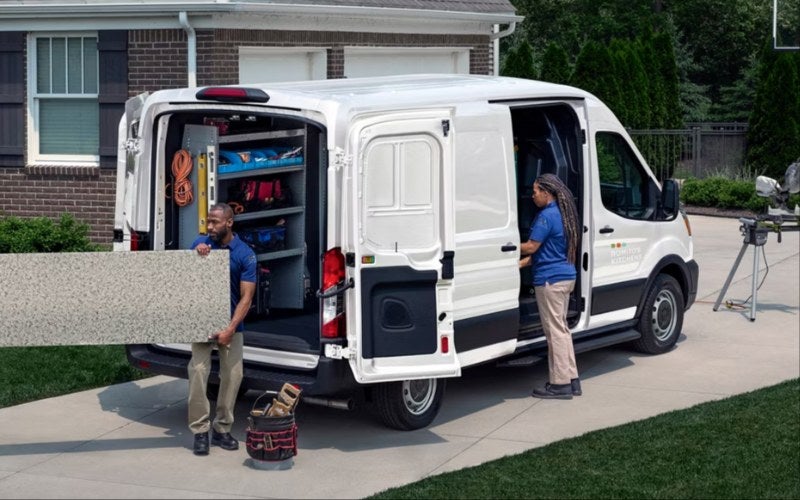
Ford of Oakland - Why the 2027 Ford Transit® Cargo Van Fits Richmond, CA Business Needs For many Richmond, CA businesses, a van is not just transportation. It is a mobile workshop, a delivery hub, a supply room, a branding tool, and sometimes the most important piece of equipment in the operation. That is why the 2027 Ford Transit® Cargo Van deserves close attention from shoppers who need capability that can be configured around real work. It brings together multiple roof heights, multiple body lengths, available Intelligent All-Wheel Drive, strong gas engine choices, and useful driver assistance technology in a package that can be tailored for trades, delivery, maintenance, logistics, and service-based work. The reason the Cargo Van trim is such a smart starting point is simple: it gives business owners room to build. Richmond has a practical mix of industrial corridors, neighborhood service routes, waterfront access, bridge connections, and East Bay freeway travel. A van serving this area may need to carry tools in the morning, parts in the afternoon, and finished goods before the day is over. The Transit® Cargo Van is engineered for that kind of flexibility, which makes it a strong fit for online shoppers who want one vehicle that can adapt instead of forcing the business to compromise. Built Around the Work, Not the Other Way Around The 2027 Ford Transit® Cargo Van can be configured with Low, Medium, or High roof heights, along with Regular, Long, or Extended lengths. That range matters because no two businesses use cargo space the same way. A plumbing company may prioritize vertical room for bins and standing access. A catering supplier may want length for rolling racks and equipment. A mobile repair technician may need enough interior space for shelving while keeping the van manageable on tighter urban streets. This is where the Transit® Cargo Van feels especially practical. Instead of offering one basic layout, it lets the buyer think through the daily route, the size of the equipment, the number of stops, and the kind of upfit that would make the workday smoother. In Richmond, where a route can move from local customer calls to I-580 or I-80 quickly, that balance of size and usability is important. Powertrain Choices That Match Different Priorities Ford gives Transit® Cargo Van shoppers two available gas engine paths: the 3.5L PFDi V6 and the 3.5L EcoBoost® V6. The 3.5L PFDi V6 is a solid choice for businesses that want proven daily capability for regular hauling, service calls, and delivery use. The 3.5L EcoBoost® V6 adds turbocharged performance for drivers who regularly carry heavier loads, work on demanding routes, or want extra strength when merging, climbing grades, or towing. Available Intelligent All-Wheel Drive adds another layer of confidence. For businesses that move between paved lots, construction areas, hills, and varied customer locations, that option can help create a more secure driving experience. Rear-wheel drive remains a straightforward and capable setup, but available Intelligent All-Wheel Drive can be a smart upgrade for companies that want broader route flexibility throughout the Bay Area. Why the Cargo Van Trim Works for Richmond Operators Richmond’s business landscape includes contractors, port-adjacent logistics, building maintenance teams, food service suppliers, community organizations, and independent operators. The Transit® Cargo Van fits that mix because it is not locked into one narrow use case. It can become a delivery van, a field service van, a parts vehicle, or a specialized trade platform. With a maximum payload of up to 5,047 lbs when properly equipped and a maximum towing capacity of up to 6,900 lbs when properly equipped, it brings serious capability to the table. Service contractors: Use the cargo area for shelving, ladders, tools, parts, and jobsite supplies. Delivery businesses: Choose the body length and roof height that best match package volume and route density. Mobile technicians: Build an organized interior with room for diagnostic gear, hardware, and replacement components. Event and catering teams: Carry supplies, containers, staging materials, and equipment with a layout tailored to the task. That adaptability is one of the biggest reasons to choose the Cargo Van trim. A business can start with the right body configuration, then add the upfit, storage, and workflow tools that make sense. Rather than buying a van and working around its limits, the Transit® Cargo Van encourages a more strategic approach. Technology That Helps During Long Workdays Capability is only part of the ownership experience. A commercial van also needs to support the driver, especially when the day includes repeated stops, tight parking, customer addresses, and heavy traffic. The 2027 Ford Transit® Cargo Van includes standard Ford Co-Pilot360® technology, with features such as front and rear parking sensors, Pre-Collision Assist® with Automatic Emergency Braking, and Lane-Keeping System. These systems can help drivers stay more aware of the area around the vehicle and respond to everyday challenges. The 12-inch center display with SYNC® 4 also makes the cabin feel more modern and manageable. For drivers juggling routes, calls, directions, and job details, a clear display can make a meaningful difference. The interior is practical, but it is not outdated. Ford understands that work vehicles are often offices on wheels, and the Transit® Cargo Van gives drivers the kind of interface expected in a modern commercial vehicle. How to Choose the Right Transit® Cargo Van Setup Online shoppers should think beyond the basic idea of “cargo space” and focus on how the van will be used every day. The best configuration is the one that reduces wasted movement, keeps tools organized, protects cargo, and helps the driver move efficiently from stop to stop. Before choosing a roof height or length, it helps to map out the actual workday. Measure your cargo: Consider the tallest items, longest tools, largest bins, and most awkward equipment. Plan your upfit: Think about shelving, partitions, racks, drawers, flooring, and lighting before selecting dimensions. Review your routes: Match size and drivetrain to local streets, freeway travel, parking access, and jobsite conditions. Consider future growth: Choose a configuration that supports today’s workload without limiting tomorrow’s opportunities. For Richmond-area businesses, that planning can help ensure the van works well on Cutting Boulevard, along marina-area routes, near industrial job sites, and across broader East Bay service territory. The Transit® Cargo Van is at its best when its configuration is chosen with a clear business purpose. Frequently Asked Questions: Is the 2027 Ford Transit® Cargo Van good for upfitting? Yes. Its multiple roof heights and body lengths make it a strong platform for shelving, partitions, ladder racks, storage systems, and trade-specific interiors. The right setup can turn the cargo area into a highly organized workspace. Which engine should I choose for the Transit® Cargo Van? The 3.5L PFDi V6 is a practical choice for many daily business needs, while the 3.5L EcoBoost® V6 is appealing for drivers who want added strength for heavier loads, more demanding routes, or towing. Why buy the Cargo Van trim instead of a passenger model? The Cargo Van is designed around open space, equipment storage, and business customization. If the priority is hauling tools, products, materials, or specialized gear rather than people, it is the most focused choice in the Transit® lineup. The 2027 Ford Transit® Cargo Van stands out because it respects the way work actually happens. It gives Richmond, CA businesses the ability to choose the right footprint, the right powertrain, and the right interior strategy. For online shoppers comparing commercial vans, that kind of flexibility is not just convenient. It is the difference between owning a vehicle that gets by and choosing one that actively supports the business. *Image may not be actual model Request more 2027 Ford Transit information