

Ford of Oakland - What to Know About the 2027 Ford Transit
The 2027 Ford Transit continues to stand out as one of the most flexible work-ready vans in the commercial vehicle market. Built for businesses, crews, shuttle services, delivery routes, mobile trades, and organizations that need adaptable transportation, the Transit lineup offers a wide range of configurations without losing sight of everyday drivability. Whether your priority is cargo space, passenger capacity, upfit potential, confident power, or electric capability, the 2027 Transit gives you practical choices that can be matched to the way your work actually gets done.
At Ford of Oakland, we understand that choosing a commercial van is not just about picking a model - it is about selecting a tool that supports productivity, organization, safety, and long-term value. The 2027 Ford Transit is designed with that mindset. With multiple roof heights, body lengths, gas and electric powertrain options, available Intelligent All-Wheel Drive, smart driver-assistance technology, and a cabin built around usability, this van is engineered to help keep businesses moving with confidence.
A Lineup Built Around Real Business Needs
One of the biggest strengths of the 2027 Ford Transit is the breadth of the lineup. Ford offers several key models, including the Transit Cargo Van, Transit Passenger Van XL, Transit Passenger Van XLT, and E-Transit Cargo Van. That range helps business owners, fleet managers, contractors, and community organizations select a van that aligns with day-to-day use instead of forcing a one-size-fits-all solution.
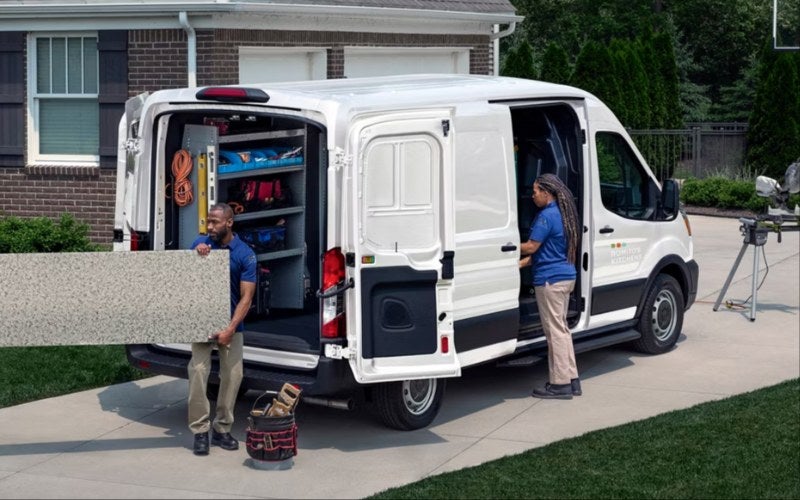
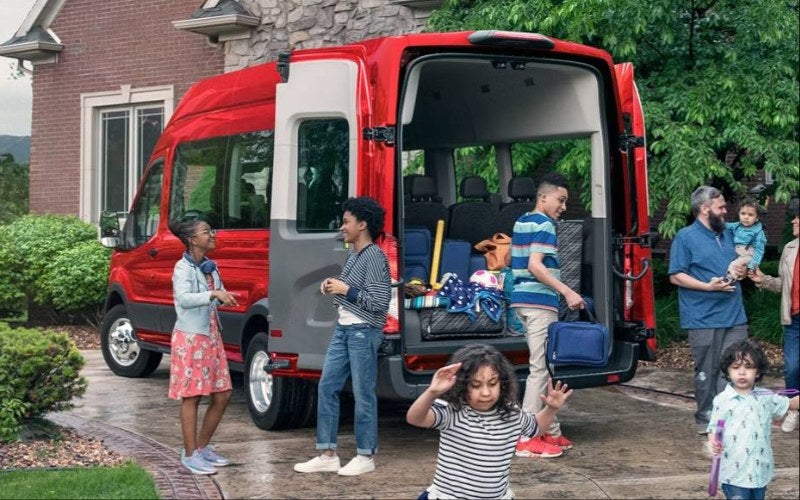
The Cargo Van is ideal for trades, deliveries, service calls, equipment transport, and mobile business builds. The Passenger Van models are designed for moving people comfortably, with seating configurations that can accommodate up to 15 passengers depending on the layout. The E-Transit Cargo Van brings fully electric capability to businesses looking to reduce fuel use and support cleaner fleet operations while keeping the utility that makes the Transit so valuable.
- Transit Cargo Van: A strong choice for contractors, delivery teams, installers, mobile service providers, and upfit-focused businesses.
- Transit Passenger Van XL: A practical people-moving option for shuttles, group transportation, community programs, and business travel.
- Transit Passenger Van XLT: A passenger-focused model with added convenience and available advanced driver-assistance features.
- E-Transit Cargo Van: A fully electric cargo solution for businesses that want capability with plug-in efficiency.
Configurable Space for Cargo, People, and Specialized Upfits
The 2027 Transit is known for flexibility, and that remains one of its strongest selling points. The Cargo Van offers multiple roof heights and body lengths, including low, medium, and high roof options, along with regular, long, and extended-length configurations. This allows owners to prioritize maneuverability, interior standing room, total cargo volume, or a balance of all three.
For businesses that carry tools, shelving, inventory, parcels, or jobsite materials, the ability to choose the right interior dimensions can make a noticeable difference. A high-roof Transit can support easier movement inside the cargo area, while an extended-length model can help accommodate larger loads or more elaborate storage systems. For passenger transport, the available seating layouts make the Transit a smart fit for organizations that need comfortable, dependable group mobility.
- Roof height options: Low, medium, and high roof choices help match the van to cargo needs, parking requirements, and interior workspace preferences.
- Body length options: Regular, long, and extended configurations support everything from compact urban routes to high-volume hauling.
- Passenger flexibility: Available seating for up to 15 passengers makes the Transit useful for shuttles, teams, and group transportation.
- Upfit potential: The spacious interior can be adapted for shelving, racks, partitions, tool storage, refrigeration, mobility needs, and other business-specific layouts.
Performance Choices That Fit the Job
The 2027 Ford Transit offers two available gas engines: a 3.5L PFDi V6 and a 3.5L EcoBoost V6. Both are designed to support the demands of commercial use, giving drivers the power needed for hauling, stop-and-go routes, highway travel, and loaded workdays. The available extended range fuel tank can also be a valuable addition for routes that involve longer distances or frequent travel between job locations.
Available Intelligent All-Wheel Drive adds another layer of confidence for drivers who face uneven roads, steep driveways, jobsite surfaces, or changing traction needs. Rear-Wheel Drive remains a strong standard-style choice for many commercial users, while AWD can be a smart upgrade for businesses that value added grip and control. Properly configured, the Transit Cargo Van can support serious payload and towing needs, including a maximum payload rating above 5,000 pounds and a maximum towing rating up to 6,900 pounds.
Technology That Supports Confidence and Efficiency
Modern work vans need to do more than carry cargo. Drivers rely on technology for awareness, route support, communication, parking assistance, and overall ease of use. The 2027 Transit includes a 12-inch center display with SYNC 4, giving the cabin a clean, functional command center for key vehicle and connectivity features.
Ford Co-Pilot360 technology is also a major advantage. Standard driver-assistance features include front and rear parking sensors, Pre-Collision Assist with Automatic Emergency Braking, and Lane-Keeping System. These features are especially useful for vans that operate in busy streets, tight loading areas, parking lots, campuses, job sites, and delivery zones. On select configurations, Ford Co-Pilot360 Assist 2.0 adds features such as Adaptive Cruise Control and a 360-Degree Camera, helping drivers manage longer drives and tighter maneuvering with greater confidence.
- 12-inch center display: A large screen helps keep key information clear and easy to access.
- SYNC 4: The infotainment system supports connectivity and a more modern in-cabin experience.
- Pre-Collision Assist: Automatic Emergency Braking can help support driver awareness in busy traffic situations.
- Parking sensors: Front and rear sensors help with tight spaces, loading areas, and urban maneuvering.
- Available 360-Degree Camera: This feature can help drivers see more around the van when positioning or parking.
Why the E-Transit Cargo Van Deserves Attention
The 2027 E-Transit Cargo Van is a compelling option for businesses interested in electric commercial transportation. It is designed for work, not just efficiency, with a fully electric powertrain and a maximum payload rating of 3,322 pounds. For delivery companies, service providers, municipal fleets, campus operations, and local businesses with predictable daily routes, the E-Transit can offer a smart path toward reducing fuel dependence while keeping the same Transit-style utility.
Available Pro Power Onboard adds even more jobsite usefulness by providing mobile power for tools and equipment. The available Vehicle Integration System 2.0 can also support businesses that require specialized electrical connections or upfit integration. For owners who are evaluating total operating costs, charging logistics, driver habits, and route planning, the E-Transit gives the Transit lineup a forward-looking option without asking businesses to compromise on practicality.
Interior Comfort and Everyday Practicality
A commercial van is often a mobile office, break space, equipment hub, and transportation tool all in one. The 2027 Ford Transit cabin reflects that reality with a driver-focused layout, supportive seating, useful visibility, and technology positioned for everyday access. Small details matter when a driver spends hours behind the wheel, makes repeated stops, or uses the van as a core part of the workday.
The passenger models add another layer of value by focusing on group comfort. Organizations that move employees, clients, students, guests, or community members can benefit from available multi-row seating and a spacious cabin. For cargo users, the clean rear compartment supports organization and customization, which can help reduce time spent searching for tools, materials, or packages.
Who Should Consider the 2027 Ford Transit?
The 2027 Transit fits a wide range of professional and personal-use needs. It can serve as a dependable delivery van, a mobile workshop, a passenger shuttle, a fleet vehicle, or a platform for specialized upfits. Its strongest appeal is the ability to tailor the van to the mission - from compact cargo transport to high-roof workspaces and electric fleet solutions.
- Contractors and tradespeople: The Transit can be configured with shelving, racks, partitions, and storage for tools and materials.
- Delivery and logistics teams: Cargo volume, payload capability, and driver-assistance features support busy route operations.
- Passenger transport services: Available seating for up to 15 passengers makes the Transit useful for shuttles and group travel.
- Fleet operators: Multiple configurations make it easier to standardize vehicles while tailoring each van to a role.
- Electric-focused businesses: The E-Transit Cargo Van supports organizations building a more efficient commercial fleet.
Shopping for a 2027 Ford Transit Locally
For businesses and drivers comparing commercial vans, it helps to start with the job requirements. Consider what you carry, how far you drive, where the van will park, how much interior height you need, whether passengers or cargo matter most, and whether gas or electric power best fits your operation. A thoughtful approach can make the difference between buying a van that simply works and choosing one that actively improves your workflow.
Our team is proud to help local business owners and drivers compare Transit configurations while serving San Francisco, Livermore, and Berkeley. From cargo capacity and roof height to powertrain selection and available technology, we can help narrow the choices so the final van fits your route, industry, and long-term goals.
Frequently Asked Questions:
What engines are offered for the 2027 Ford Transit?
The 2027 Ford Transit offers a 3.5L PFDi V6 and an available 3.5L EcoBoost V6 for gas-powered models. The E-Transit Cargo Van uses a fully electric powertrain.
Is the 2027 Ford Transit available with All-Wheel Drive?
Yes. Available Intelligent All-Wheel Drive is offered on select Transit configurations, giving drivers added traction confidence when conditions or work environments require it.
How many passengers can the 2027 Ford Transit carry?
Depending on configuration, the Transit Passenger Van can seat up to 15 passengers, making it a strong choice for shuttle services, teams, organizations, and group transportation.
What is the maximum payload for the 2027 Ford Transit?
Properly configured gas-powered Transit models can support a maximum payload above 5,000 pounds. The E-Transit Cargo Van offers a maximum payload of 3,322 pounds.
Does the 2027 Ford Transit include driver-assistance features?
Yes. Standard Ford Co-Pilot360 features include front and rear parking sensors, Pre-Collision Assist with Automatic Emergency Braking, and Lane-Keeping System. Additional features are available on select models.
Is the E-Transit a good fit for business use?
Yes. The E-Transit Cargo Van is designed for commercial use, with electric power, practical payload capability, and available features such as Pro Power Onboard for mobile jobsite support.
The 2027 Ford Transit remains a smart, versatile, and business-focused van for drivers who need capability without unnecessary complication. With multiple models, flexible dimensions, gas and electric powertrain options, useful technology, and strong upfit potential, it is built to adapt to the way modern businesses operate.